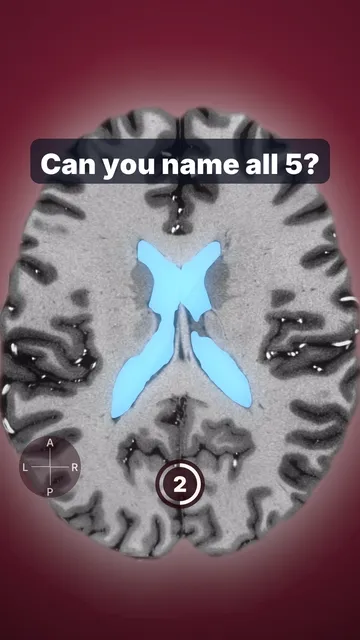
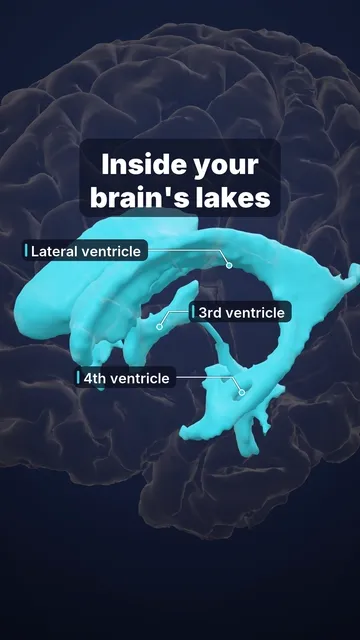
0:25, silent. Watch it with music on Instagram.
Leonardo da Vinci's wax cast of the ventricles
Brain ventricles, the history: Leonardo da Vinci went looking for the mind
For more than 1,000 years, scholars placed the mind in the hollow chambers of the brain, the ventricles: the senses in the front, reasoning in the middle, memory at the back.
Around 1508, Leonardo da Vinci set out to see these chambers. His notes: make a hole in the 4th ventricle, vent holes in the horns of the lateral ventricles, inject melted wax with a syringe, let it set, then cut the brain away. He probably used a cow's brain. It is the first recorded cast of a body cavity in medicine.
On the same sheet he still gave each chamber a job of the mind:
- Lateral ventricles: "imprensiva", where the impressions of the senses arrive
- 3rd ventricle: "senso comune", the common sense, where the senses meet
- 4th ventricle: "memoria", memory
Today we know they hold cerebrospinal fluid, not thoughts: about 500 mL is made every day, and it flows from the lateral ventricles through the 3rd ventricle and the aqueduct into the 4th.
Sources and licence
Data: 7 T MRI of one volunteer and its 3D segmentation (Lüsebrink et al., Sci Data 2021, CC0), smoothed for display; aqueduct and foramina of Monro traced by us on the same scan. History: Royal Collection Trust, RCIN 919127 (the wax experiment and his labels), 912603, 912602. CSF: Adult Hydrocephalus, Cambridge University Press 2014.
Video licence: CC BY 4.0. To reuse it, credit “Cerebrarium (Aldo Spolaore)”, link to this page and name the data sources above.
Educational content, not medical advice.