0:32, silent. Watch it with music on Instagram.
What's a seahorse doing in your brain?
The deep nuclei were named after what anatomists thought they looked like: a seahorse, an almond, a shell, a pale globe.
Brain museum, part 1 of 2Next: Leonardo da Vinci's wax cast of the ventricles
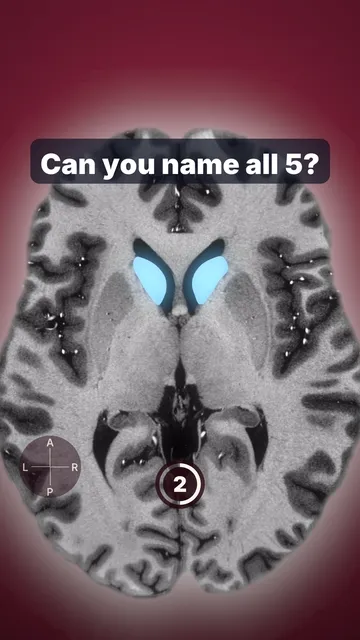
Anatomists named the deep nuclei after what they looked like:
- Hippocampus: Greek for "seahorse" (Arantius, 1587)
- Amygdala: Greek for "almond"
- Thalamus: Greek for "inner chamber"
- Caudate nucleus: Latin for "with a tail" (head, body, tail)
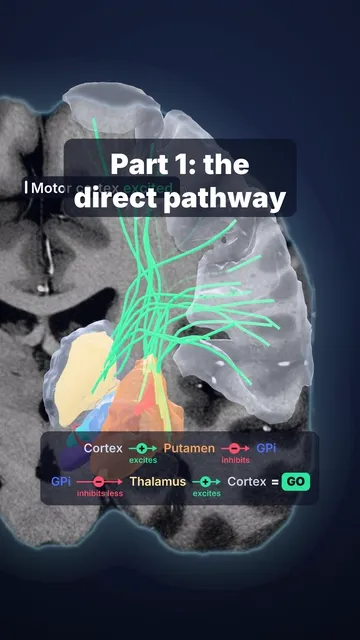
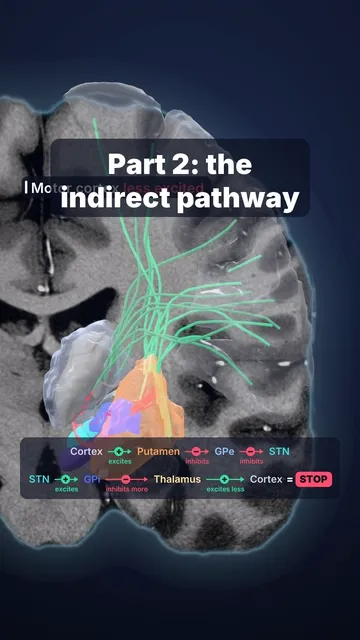
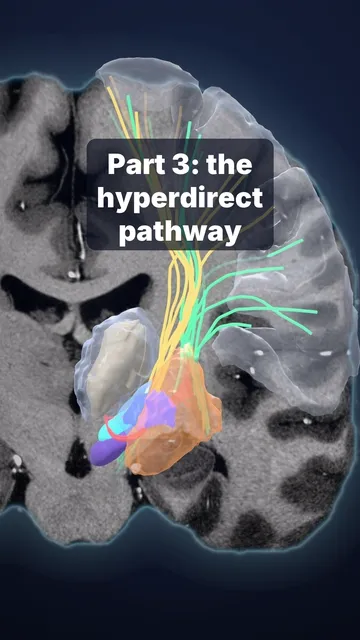
- Putamen: Latin for "shell, husk"
- Globus pallidus: Latin for "pale globe" (pale from its many myelinated fibres)
- Putamen + globus pallidus = the lentiform nucleus: Latin for "lens-shaped"
- Substantia nigra: Latin for "black substance" (neuromelanin). Its dopamine neurons are lost in Parkinson's disease.
Sources and licence
Data: 7 T MRI of one volunteer and its 3D segmentation (Lüsebrink et al., Sci Data 2021, CC0); substantia nigra: MASSP 2.0 atlas (CC BY 4.0). The 3D models are smoothed for display. Names: Arantius 1587; Lewis & Short Latin dictionary; Etymonline.
Video licence: CC BY 4.0. To reuse it, credit “Cerebrarium (Aldo Spolaore)”, link to this page and name the data sources above.
Educational content, not medical advice.